
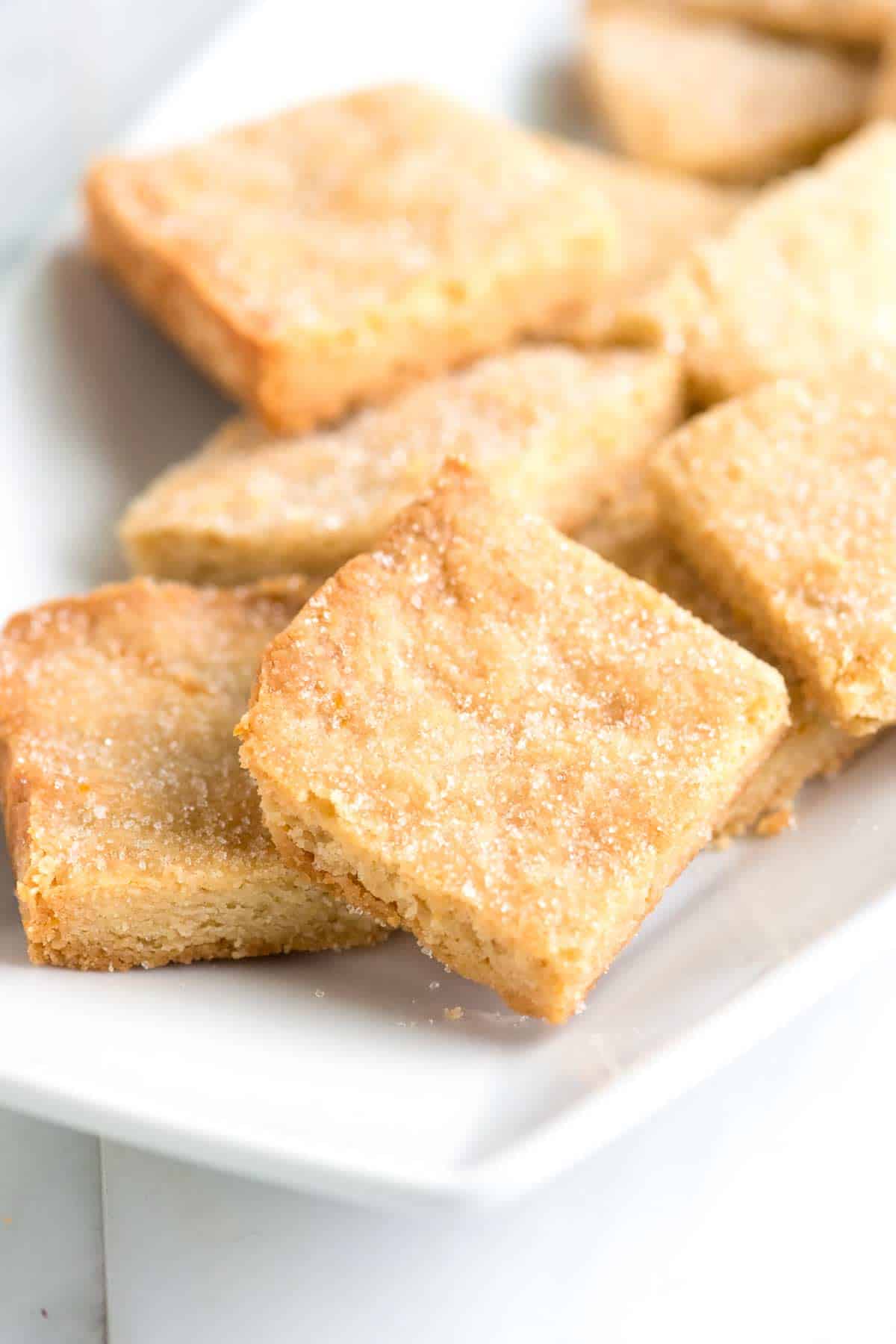
Butter Shortbread Cookies
Buttery, tender, and pleasantly crisp, shortbread cookies are a classic treat made with a handful of simple ingredients. Their rich flavor comes from butter, while a gentle touch when mixing helps give them their signature delicate texture. Enjoy them plain, dip them in chocolate, or serve them alongside tea or coffee.
What Makes Shortbread Special?
Traditional shortbread is known for its simple combination of butter, sugar, and flour. Unlike many drop cookies, it usually contains no eggs or leavening, so the dough stays dense and the baked cookies have a delicate, crumbly bite. Good-quality butter makes a noticeable difference, so choose a butter you enjoy eating.
Ingredients
- 1 cup (2 sticks) unsalted butter, softened
- 2/3 cup granulated sugar
- 1 teaspoon vanilla extract
- 2 1/4 cups all-purpose flour
- 1/2 teaspoon fine salt
How to Make Butter Shortbread Cookies
- Prepare the oven and pans. Heat the oven to 325°F. Line two baking sheets with parchment paper.
- Cream the butter and sugar. In a large bowl, beat the softened butter and sugar until smooth and creamy, about 1 to 2 minutes. Mix in the vanilla.
- Add the dry ingredients. Whisk the flour and salt in a separate bowl. Add them to the butter mixture in batches, mixing on low just until a soft dough forms. Avoid overmixing.
- Chill the dough. Shape the dough into a disk, wrap it, and refrigerate for about 30 minutes. Chilling makes it easier to roll and helps the cookies hold their shape.
- Shape the cookies. On a lightly floured surface, roll the dough to about 1/2 inch thick. Cut into rounds or rectangles and arrange them on the prepared baking sheets, leaving a little space between each cookie. Prick the tops with a fork if desired.
- Bake. Bake for 18 to 22 minutes, until the cookies look set and the edges are just beginning to turn golden. Shortbread should stay fairly pale.
- Cool. Let the cookies rest on the baking sheet for 5 minutes, then transfer them to a rack to cool completely.
Tips for Tender, Flavorful Shortbread
- Let the butter soften until it gives slightly when pressed, but don’t let it melt.
- Measure flour accurately. Too much flour can make shortbread dry and crumbly before baking.
- Mix only until the dough comes together. Working it too much can make the cookies firm.
- For a finer texture, use superfine sugar or pulse regular granulated sugar briefly in a food processor.
- For extra flavor, add the finely grated zest of a lemon or orange, or dip the cooled cookies in melted chocolate.
Variations
Shortbread is an easy recipe to customize. Stir in mini chocolate chips, finely chopped toasted nuts, or a pinch of ground cardamom. For a festive finish, sprinkle the cookies with coarse sugar before baking. You can also press the dough into a parchment-lined pan, score it into bars, and bake it as a slab; separate the pieces after they have cooled slightly.
Storing Shortbread Cookies
Store completely cooled cookies in an airtight container at room temperature for up to one week. For longer storage, freeze them in a sealed container for up to three months. Thaw at room temperature before serving.
With their crisp edges, tender centers, and rich buttery taste, homemade shortbread cookies are a simple classic worth keeping in the baking rotation. A cup of tea, a little chocolate, or a dusting of sugar is all they need to feel special.
6 Essential Tips for Perfect Butter Shortbread Cookies
- Use high-quality butter for the best flavor.
- Keep the butter cool but pliable.
- Mix just until the dough comes together.
- Chill the dough before baking.
- Bake until the edges are lightly golden.
- Let cookies cool before moving them.
Use high-quality butter for the best flavor.
For the best-tasting butter shortbread cookies, choose high-quality butter with a fresh, rich flavor. Since butter is the star ingredient, its taste comes through in every bite. Use unsalted butter so you can control the salt level, and let it soften at room temperature before mixing for a smooth, evenly blended dough.
Keep the butter cool but pliable.
Keep the butter cool but pliable when making shortbread cookies. It should give slightly when pressed, but shouldn’t look shiny, feel greasy, or be starting to melt. Butter that’s too warm can make the dough soft and cause the cookies to spread, while butter that’s too cold can be difficult to mix evenly. If it softens too much, chill it briefly before continuing.
Mix just until the dough comes together.
Mix the shortbread dough just until it comes together and no large patches of dry flour remain. Overmixing develops the flour’s gluten, which can make the cookies firm instead of tender and crumbly. If the dough still looks a little shaggy, gently press it together with your hands rather than continuing to beat it.
Chill the dough before baking.
Chilling the dough before baking helps butter shortbread cookies keep their shape and bake more evenly. It firms up the butter, reducing the chance that the cookies will spread too much in the oven, and makes the dough easier to roll and cut. Wrap the dough and refrigerate it for about 30 minutes, or until it feels firm but is still easy to work with.
Bake until the edges are lightly golden.
Bake the shortbread cookies until their edges are lightly golden, while the centers remain pale. This subtle color is a helpful sign that the cookies are done without being overbaked. Because shortbread continues to firm up as it cools, take the baking sheet out of the oven as soon as the edges begin to turn golden for a tender, delicate texture.
Let cookies cool before moving them.
Let butter shortbread cookies cool on the baking sheet for about 5 minutes before moving them. They’re delicate when they first come out of the oven and can crumble if handled too soon. Once they’ve firmed up slightly, transfer them gently to a wire rack to cool completely.
Tags: all-purpose flour, baking, butter shortbread cookies, chilling, chocolate, cookie dough, crisp edges, fine salt, granulated sugar, high-quality butter, storage, tea, tender texture, unsalted butter, vanilla extract