
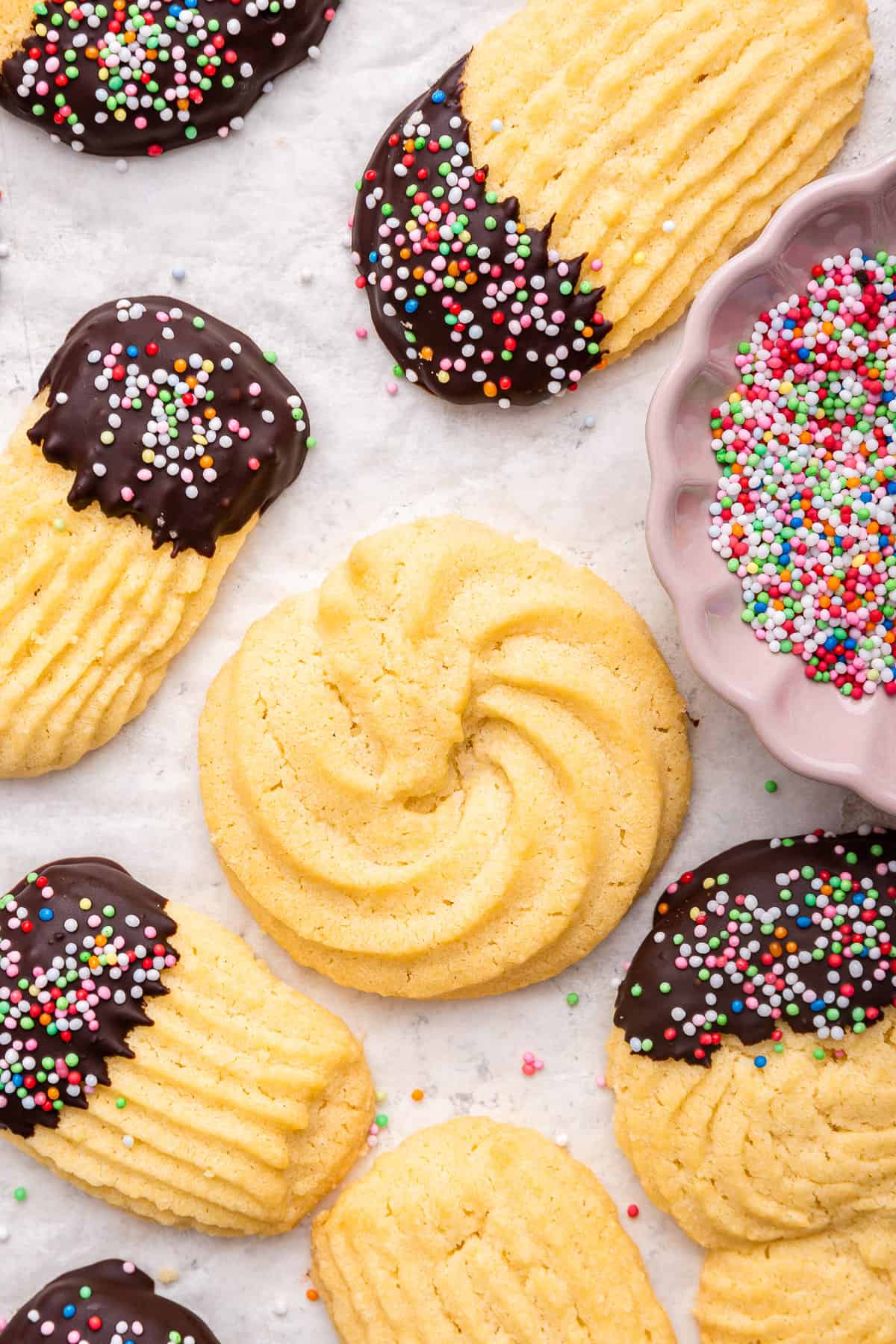
The Delightful World of Butter Cookies
Butter cookies, also known as Danish biscuits or sugar cookies, are a classic treat loved by people of all ages around the world. These simple yet delicious cookies have a rich buttery flavor and a melt-in-your-mouth texture that makes them irresistible.
What sets butter cookies apart is their key ingredient – butter. The high butter content gives these cookies their tender crumb and delicate flavor. Combined with sugar, flour, and sometimes additional ingredients like vanilla or almond extract, butter cookies are a delightful indulgence that pairs perfectly with a cup of tea or coffee.
Butter cookies come in various shapes and sizes, from traditional round shapes to intricate designs created using cookie cutters or piping bags. They can be enjoyed plain or decorated with sprinkles, chocolate drizzles, or frosting for an extra touch of sweetness.
One of the joys of baking butter cookies is the versatility they offer. You can customize the flavor by adding ingredients like citrus zest, spices, nuts, or dried fruits to create your unique twist on this classic recipe. Whether you prefer a simple shortbread-like cookie or a more elaborate creation, butter cookies are endlessly adaptable to suit your taste preferences.
Whether you bake them for special occasions, holidays, or simply as a sweet treat for yourself and your loved ones, butter cookies never fail to bring joy and comfort. Their timeless appeal and delicious taste make them a beloved staple in any baker’s repertoire.
So why not indulge in the simple pleasure of baking a batch of butter cookies today? With just a few basic ingredients and some creativity, you can experience the magic of these delightful treats firsthand.
Everything You Need to Know About Butter Cookies: FAQs and Tips
- Why are butter cookies not crispy?
- Why are they called butter cookies?
- What is the difference between butter cookies and shortbread?
- What is the difference between a sugar cookie and a butter cookie?
- What are some common butter cookie mistakes?
Why are butter cookies not crispy?
Butter cookies are not crispy because of their high butter content, which contributes to their tender and melt-in-your-mouth texture. The butter in the cookie dough prevents the cookies from becoming overly crisp during baking, resulting in a softer and more delicate consistency. Additionally, the sugar content in butter cookies also plays a role in keeping them soft rather than crispy. The combination of butter and sugar creates a rich and moist cookie that is prized for its smooth texture and rich flavor profile.
Why are they called butter cookies?
Butter cookies are aptly named for their main ingredient, butter. The high proportion of butter in these cookies gives them their distinct rich flavor and tender texture that sets them apart from other types of cookies. The butter not only contributes to the delicious taste but also plays a crucial role in creating the melt-in-your-mouth quality that is characteristic of butter cookies. This emphasis on butter in the name highlights the key role this ingredient plays in defining the essence of these beloved treats, making them a favorite indulgence for many cookie enthusiasts.
What is the difference between butter cookies and shortbread?
When it comes to the distinction between butter cookies and shortbread, the key differences lie in their ingredients and textures. Butter cookies typically contain a higher sugar content compared to shortbread, giving them a sweeter taste. Additionally, butter cookies often include additional flavorings such as vanilla or almond extract, while shortbread sticks to the basics of butter, sugar, and flour. In terms of texture, butter cookies tend to be lighter and crisper, with a more delicate and melt-in-your-mouth consistency, whereas shortbread is known for its dense and crumbly texture. Both treats showcase the rich flavor of butter but offer unique characteristics that cater to different preferences and occasions.
What is the difference between a sugar cookie and a butter cookie?
When it comes to the difference between a sugar cookie and a butter cookie, the key distinction lies in the ingredients used and their respective ratios. While both cookies contain butter as a primary ingredient, sugar cookies typically have a higher ratio of sugar to butter, resulting in a sweeter taste and slightly crisper texture. On the other hand, butter cookies have a higher proportion of butter to sugar, giving them a rich, buttery flavor and a more tender, melt-in-your-mouth consistency. Additionally, sugar cookies are often rolled out and cut into shapes before baking, while butter cookies are usually piped or formed into rounds. Ultimately, both types of cookies offer unique characteristics that cater to different preferences and occasions.
What are some common butter cookie mistakes?
When it comes to baking butter cookies, there are a few common mistakes that can affect the outcome of your delicious treats. One common mistake is overmixing the cookie dough, which can lead to tough and dense cookies instead of the desired tender and crumbly texture. Another mistake is using butter that is either too soft or too cold, as the temperature of the butter plays a crucial role in achieving the right cookie consistency. Additionally, baking butter cookies at too high a temperature can cause them to brown too quickly on the outside while remaining undercooked inside. By being mindful of these common pitfalls and following a trusted recipe closely, you can ensure that your butter cookies turn out perfect every time.
Tags: almond extract, butter cookies, buttery flavor, classic treat, cookie cutters, cup of coffee, cup of tea, danish biscuits, delicate flavor, delightful indulgence, flour, high butter content, intricate designs, key ingredient, melt-in-your-mouth texture, piping bags, sugar, sugar cookies, tender crumb, traditional round shapes, vanilla extract, various shapes and sizes